The stage everyone skips
Don't buy the growth engine prematurely.

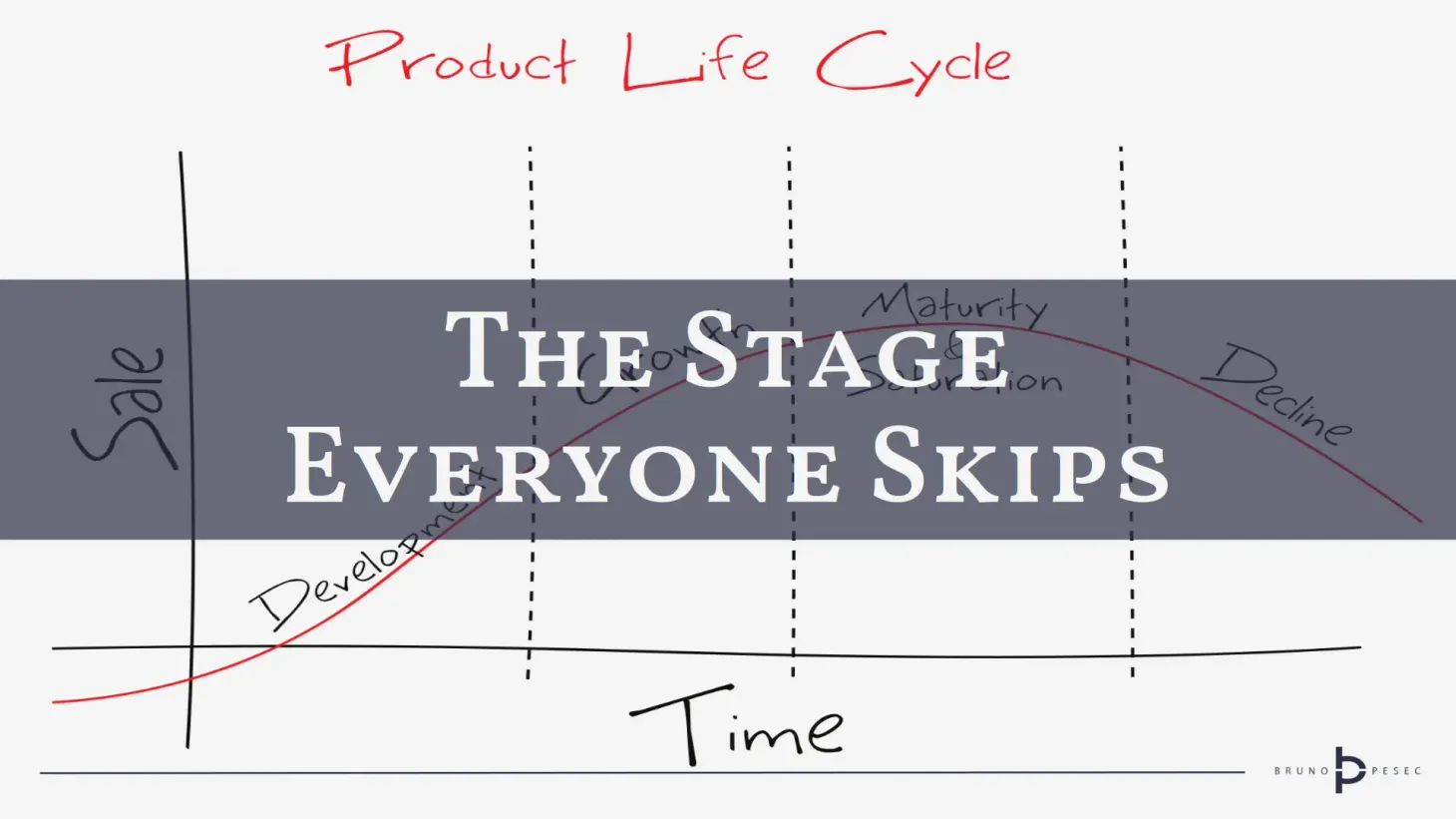
The product life cycle model, hailing from the fifties, consists of four broad stages: market development, market growth, market maturity, and market decline. And now, almost eighty years later, most companies still treat the first one as optional.
"We are already in this market. Our customers know us."
"They trust the brand. If we launch something, they will recognise it and come."
Above might be true if we squint really hard an focus only on small, incremental, feature-focused changes. And even that is questionable. Where it most definitely falls apart is when doing something novel. Then being established only provides you more money to burn until getting it right.
Webvan, and online grocer founded in 1996, is a classic warning case of skipping market development. Their value proposition was grocery delivery inside a thirty minute window. Investors loved the idea, it was during dot com bubble, and so they ordered twenty six automated warehouses for around a billion dollars. In 2000 they turned over $178m against expenses of $525m. They bankrupted in 2001.
The value proposition wasn't the problem in itself, after all Amazon is wildly successful with the same. Rather, it was skipping one of the most important stages for identifying key demand parameters and growth engines for a given business model—the market development stage.
This early stage is critical for understanding the demand, from the customers' perspective. In fact, I find it so important I suggest zooming into it and breaking it down into three sub-phases:
- market exploration, where you dip a toe in and ask whether this thing exists at all or you have imagined it;
- market validation, where you see whether customers will actually do something, even in small numbers; and
- market audition, where you put the smallest real version into the market and look for early traction worth growing.
First we want to quickly see if the market exists at all, then if customers will do as they say, and finally, if what we have can move the needle at all. By matching funding to each stage we can move fast, minimise our own risk, and focus our people on value creation.
Regardless of the approach taken, please don't skip the market development stage. A growth organisation created prematurely will at best require significant rework, or at worst take the whole organisation down with it. Spend an hour or so to check if the market exists in the first place.

Bruno Unfiltered
Subscribe to get the latest posts delivered right to your inbox. No spam. Only Bruno.